In the last few years, Calvinism has experienced quite a resurgence in evangelicalism and especially Baptists life. Calvinism is a heavily theological movement and so ideas are thus worked out. However, Reformed Baptists have an awkward challenge before them.because John Calvin was not a baptist and his entire theological system was designed in contradiction to baptist theology. This has lead these baptist ministers to go in directions which are heterodox to both baptists and reformers. Such is the case with the baptist reformed doctrine of Lordship Salvation. Reformed baptist unlike their reformed step parents emphasize more emotion and not as much strict logic in their theology. This has lead to the following caricature. A negative attitude towards humanity, a zealous desire to avenge God, and an elitist relationship with God. Core to the baptist reformed doctrine is the axiom of regeneration prior to faith fusing faith with repentance of sin. In order to evangelize, the reformed baptist must ask the unbeliever to believe and do good works as well, thus being practically indifferent from works based salvation. Now the reformed baptist are sure to know that this is not the traditional baptist understanding of evangelism. In fact reformed baptist like Paul washer and David Platt have been quick to anathematize modern baptists evangelist. And while the contemporary church growth "seeker sensitivity" methods of white washing conversion are long overdo for criticism. These reformers seek more and at times ignore this enemy regardless. (referring to John Piper having Rick Warren Speak at the desiring God conference 2010)
But are reformed Baptists aware that there views on regeneration prior to faith are not the views held by John Calvin??
These are some excerpts THE INSTITUTES OF THE CHRISTIAN RELIGION(henry beveridge trans.): book 3 chapter3 "Regeneration by Faith. of repentance"
section 9 "In one word, then, by repentance I understand regeneration, the only aim of which is to form anew the image of God, which was sullied, and all but effaced by the transgression of Adam."
section 1 "The shortest transition, however, will be from faith to repentance; for repentance being properly understood, it will better appear how a man is justified freely by faith alone, and yet that holiness of life, real holiness, as it is called, is inseparable from the free imputation of Christ righteousness. That repentance not only follows faith, but is produced by it ought to be without controversy." Now as Calvin defined repentance to be the timing of regeneration, we see that calvin taught that faith is prior to regeneration. Repentance is then the natural product of justification and not the pre-requisite. "... it is certain, that no man can embrace the grace of the gospel without betaking himself from the errors of his former life into the right path and making it his whole study to practice repentance."
section 5 "For in comprehending Faith under repentance, they are at variance with what Paul says in the acts, as to his 'testifying both to the Jews and also to the Greeks, repentance toward God and faith toward our Lord Jesus Christ"(acts xx.21). Here he mentions faith and repentance as two different things. What then? Can true repentance exist without faith? by no means But although they cannot be separated, they ought to be disttinguished. As there is no faith without hope, and yet faith and hope are different, so repentance and faith, though consistently linked together, are only to be united, not confounded."
Calvin defends the protestant view of distinction. This is the foundation that leads to the separation of justification and sanctification.
Friday, February 28, 2014


Thursday, February 13, 2014
Did He see God?
John 1:18
King James Version (KJV)
18 No man hath seen God at any time, the only begotten Son, which is in the bosom of the Father, he hath declared him.
genesis 30:29 And Jacob asked him, and said, Tell me, I pray thee, thy name. And he said, Wherefore is it that thou dost ask after my name? And he blessed him there.
30 And Jacob called the name of the place Peniel: for I have seen God face to face, and my life is preserved.
31 And as he passed over Penuel the sun rose upon him, and he halted upon his thigh.
32 Therefore the children of Israel eat not of the sinew which shrank, which is upon the hollow of the thigh, unto this day: because he touched the hollow of Jacob's thigh in the sinew that shrank.
So here Jacob sees God, and yet John declares that no man has ever seen God.
But to be fair this concept is mentioned elsewhere in OT scripture.
Exodus 33:20
King James Version (KJV)
20 And he said, Thou canst not see my face: for there shall no man see me, and live.
So It is clear that we see examples of people claiming to see God, and yet also the claim is made that no one has seen God. Does this not prove that Bible contradicts itself?
First of all we have to identify the nature of the problem. It is not a textual or translational problem. It is an attack on the whole of scripture. It is a problem that must be dealt with in systematic theology, can these two paradoxical messages be reconciled?
If we are given the opportunity to explain the revelation which has been entrusted to us, then yes!
In the story with Jacob, we see Jacob, we see an individual in a wrestling match with him. Jacob assumes him to be human.
jacob was used to this as the passage indicates..
32 And Jacob went on his way, and the angels of God met him.
2 And when Jacob saw them, he said, This is God's host: and he called the name of that place Mahanaim.So spirits had the ability to manifest themselves in a physical form. This does not mean that they were truly physical or if this was an illusion. But they have done this.
hebrews 13:2 Be not forgetful to entertain strangers: for thereby some have entertained angels unawares.
With the multitudes of people that travel in and out of the modern world it would be extremely easy for a person to appear and disappear in society and there are many stories of mysterious strangers doing just that.
In systematic theology when we see a character being introduced who is in fact God in visible form, we identify that as a christophany or a theophany.
Question: "What is a theophany? What is a Christophany?"
Answer: A theophany is a manifestation of God in the Bible that is tangible to the human senses. In its most restrictive sense, it is a visible appearance of God in the Old Testament period, often, but not always, in human form.
john 1:
1 In the beginning was the Word, and the Word was with God, and the Word was God.
2 The same was in the beginning with God.3 All things were made by him; and without him was not any thing made that was made.
4 In him was life; and the life was the light of men.
5 And the light shineth in darkness; and the darkness comprehended it not.
6 There was a man sent from God, whose name was John.
7 The same came for a witness, to bear witness of the Light, that all men through him might believe.
8 He was not that Light, but was sent to bear witness of that Light.
9 That was the true Light, which lighteth every man that cometh into the world.
10 He was in the world, and the world was made by him, and the world knew him not.
11 He came unto his own, and his own received him not.
12 But as many as received him, to them gave he power to become the sons of God, even to them that believe on his name:
13 Which were born, not of blood, nor of the will of the flesh, nor of the will of man, but of God.
14 And the Word was made flesh, and dwelt among us, (and we beheld his glory, the glory as of the only begotten of the Father,) full of grace and truth.
15 John bare witness of him, and cried, saying, This was he of whom I spake, He that cometh after me is preferred before me: for he was before me.
16 And of his fulness have all we received, and grace for grace.
17 For the law was given by Moses, but grace and truth came by Jesus Christ.
Saturday, February 8, 2014
creed of the Niagra Bible conference
Here is a creed which I and New Testament christians can affirm
14 point creed of the Niagara Bible Conference of 1878:
1. The verbal, plenary inspiration of the Scriptures in the original manuscripts.
2. The Trinity.
3. The Creation of man, the Fall into sin, and total depravity.
4. The universal transmission of spiritual death from Adam.
5. The necessity of the new birth.
6. Redemption by the blood of Christ.
7. Salvation by faith alone in Christ.
8. The assurance of salvation.
9. The centrality of Jesus Christ in the Scriptures.
10. The constitution of the true church by genuine believers.
11. The personality of the Holy Spirit.
12. The believer’s call to a holy life.
13. The immediate passing of the souls of believers to be with Christ at death.
14. The premillennial Second Coming of Christ.
Niagara Bible Conference
"In 1883 a group of Christian bible scholars met for the first time at Niagara-on-the-Lake, Ontario, near Niagara Falls and established the principles of Christian fundamentalism. It was here that the Niagara Bible Conference gathered every year from 1883 through 1897 (with the exception of 1884). It met at the Queen's Royal Hotel and its pavilion. James Brooks, in his Truth magazine describes the meeting of 1892 as one
"more largely attended than ever before. Often every seat in the pavilion was occupied, and the porches were filled with eager hearers of the Word. The place too becomes more beautiful as the years go by, and it would be difficult to find a spot better suited to the quiet and prayerful study of the Sacred Scriptures. The building in which the Conference meets, overlooking Lake Ontario and the River Niagara, and surrounded by green trees, is secluded from the noise of the world; and so excellent were the arrangements for the accommodation of the guests, both in Queen's Royal Hotel and in the boarding houses of the village, that not a word of complaint was heard from any one." Some of the scholars who were present, known as the founding fathers of Fundamentalism, were W.E. Blackstone, Charles Erdman, James H. Brookes, William Moorehead, A.J. Gordon, A.C. Dixon, C.I. Scofield, and J. Hudson Taylor (who founded the China Inland Mission).
The messages generally centered on the doctrines of Jesus, the Holy Spirit, the Bible, missions and prophecy. Premillennialism was defended and taught. Article XIV of the 1878 Niagara Bible Conference Creed states,
"We believe that the world will not be converted during the present dispensation, but is fast ripening for judgment, while there will be a fearful apostasy in the professing Christian body; and hence that the Lord Jesus will come in person to introduce the millennial age, when Israel shall be restored to their own land, and the earth shall be full of the knowledge of the Lord; and that this personal and premillennial advent is the blessed hope set before us in the Gospel for which we should be constantly looking." Some of the contributions of the Niagara Conference were:
The conference spawned new missionary activity and evangelism
The conference contributed to the rise and spread of a large Bible conference movement (such as the Northfield conferences)
The conference had a significant impact on the rise of the Bible institute and Bible college movement
The conference gave early expression to Fundamentalism's emphasis on concentrated Bible study
The conference precipitated a vast amount of Fundamentalist literature, especially on the subjects of prophecy, the Person and work of Christ, the Holy Spirit and missions."
http://www.theopedia.com/Niagara_Bible_Conference
14 point creed of the Niagara Bible Conference of 1878:
1. The verbal, plenary inspiration of the Scriptures in the original manuscripts.
2. The Trinity.
3. The Creation of man, the Fall into sin, and total depravity.
4. The universal transmission of spiritual death from Adam.
5. The necessity of the new birth.
6. Redemption by the blood of Christ.
7. Salvation by faith alone in Christ.
8. The assurance of salvation.
9. The centrality of Jesus Christ in the Scriptures.
10. The constitution of the true church by genuine believers.
11. The personality of the Holy Spirit.
12. The believer’s call to a holy life.
13. The immediate passing of the souls of believers to be with Christ at death.
14. The premillennial Second Coming of Christ.
Niagara Bible Conference
"In 1883 a group of Christian bible scholars met for the first time at Niagara-on-the-Lake, Ontario, near Niagara Falls and established the principles of Christian fundamentalism. It was here that the Niagara Bible Conference gathered every year from 1883 through 1897 (with the exception of 1884). It met at the Queen's Royal Hotel and its pavilion. James Brooks, in his Truth magazine describes the meeting of 1892 as one
"more largely attended than ever before. Often every seat in the pavilion was occupied, and the porches were filled with eager hearers of the Word. The place too becomes more beautiful as the years go by, and it would be difficult to find a spot better suited to the quiet and prayerful study of the Sacred Scriptures. The building in which the Conference meets, overlooking Lake Ontario and the River Niagara, and surrounded by green trees, is secluded from the noise of the world; and so excellent were the arrangements for the accommodation of the guests, both in Queen's Royal Hotel and in the boarding houses of the village, that not a word of complaint was heard from any one." Some of the scholars who were present, known as the founding fathers of Fundamentalism, were W.E. Blackstone, Charles Erdman, James H. Brookes, William Moorehead, A.J. Gordon, A.C. Dixon, C.I. Scofield, and J. Hudson Taylor (who founded the China Inland Mission).
The messages generally centered on the doctrines of Jesus, the Holy Spirit, the Bible, missions and prophecy. Premillennialism was defended and taught. Article XIV of the 1878 Niagara Bible Conference Creed states,
"We believe that the world will not be converted during the present dispensation, but is fast ripening for judgment, while there will be a fearful apostasy in the professing Christian body; and hence that the Lord Jesus will come in person to introduce the millennial age, when Israel shall be restored to their own land, and the earth shall be full of the knowledge of the Lord; and that this personal and premillennial advent is the blessed hope set before us in the Gospel for which we should be constantly looking." Some of the contributions of the Niagara Conference were:
The conference spawned new missionary activity and evangelism
The conference contributed to the rise and spread of a large Bible conference movement (such as the Northfield conferences)
The conference had a significant impact on the rise of the Bible institute and Bible college movement
The conference gave early expression to Fundamentalism's emphasis on concentrated Bible study
The conference precipitated a vast amount of Fundamentalist literature, especially on the subjects of prophecy, the Person and work of Christ, the Holy Spirit and missions."
http://www.theopedia.com/Niagara_Bible_Conference
Wednesday, February 5, 2014
Tell me your story Lori (song for my wife)
Tell me your story Lori
How'd you hide your glow so well?
Behind every curve of your smile there is a story to tell
tragedies and triumphs
pain and joy to sell
Well you study and you think a lot but you seem to doubt the wisdom you got.
Some people take for granted what they need most
But no matter what happens with you I can surely boast
everyday people need air to breath
And that's why your like air to me.
Your not a woman with words, But a woman with heart.
And I know just how easily you'd settle for less.
But I just can't settle till I give you my best
Tell me your story Lori
How'd you hide your glow so well?
Behind every curve of your smile there is a story to tell
tragedies and triumphs
pain and joy to sell
Well you study and you think a lot but you seem to doubt the wisdom you got.
Some people take for granted what they need most
But no matter what happens with you I can surely boast
everyday people need air to breath
And that's why your like air to me.
Your not a woman with words, But a woman with heart.
And I know just how easily you'd settle for less.
But I just can't settle till I give you my best
Tell me your story Lori
Wednesday, January 1, 2014
God has history!
You know, a lot of people who are into science ask "Could God exist?"
We may argue about whether God is possible. But the Bible doesn't argue about this, because God is the one speaking!
In the Bible, God is not just a concept or idea, He is a historical character whom people have met.
When we use science we are doing experiments and calculations about the present world. But we are not doing experiments in the past. Some who believe in evolution argue that we should make guesses about the past based on the present. This philosophy is called "uniformitarianism" they say "the present is the key to the past". 1
The problem with that idea is that you can't know.... what you don't know. If you are in the basement of your house, how do you know what the clouds look like over the roof?
We did not observe and do experiments millions or billions of years ago; because we were not there. Our only ability to observe the past is through history. History is the records or accounts of people from the past. When we look at the past here is what we find. Most of the history outside of the Bible starts getting hazy if it were recorded before 800BC.2 In other words we may hear about something thousands of years ago. But we don't have any timeline to prove that the writer is giving us a legitamite account. (for instance writing a genealogy) The historical records that we do have stop nearly 5,000 years ago.3 The only historical record we have that goes further is the Bible which according to it's records and geneologies goes back 6,000 years ago.
The other ancient accounts have a lot of similarities. They believe in a world wide flood, they have similar geneologies and they believe there were giant reptiles(dinosaurs) they called dragons. also they believe in one creator God. The chinese used to pay homage to their god "shang di" which sounds similer the most high God "el shaddai" a name for the God of the bible.4
We don't find stories of "goo to you" evolution. You never see cave paintings about when the monkey decided to become a man!
When we look at the Bible we know that God was real because real people talked to Him. In the Garden of Eden, God talked to Adam and Eve and the snake simultaneously. Then their were conversations with Cain and Abel. We see God sending messages to the prophets for the next 1500 years. We have millions of other accounts of God speaking and millions and millions more of people feeling God's presence. But here at the start we see God having a conversation with two people at once.
The Bible considers itself to be factual. psalm12:6 The words of the Lord are pure words:
as silver tried in a furnace of earth, purified seven times.
7 Thou shalt keep them, O Lord,
thou shalt preserve them from this generation for ever.
The bible discourages people from believing in mythology.
2Timothy 4:2 Preach the word; be instant in season, out of season; reprove, rebuke, exhort with all long suffering and doctrine. 3 For the time will come when they will not endure sound doctrine; but after their own lusts shall they heap to themselves teachers, having itching ears; 4 And they shall turn away their ears from the truth, and shall be turned unto fables.
Colossians 2:18 Let no man beguile you of your reward in a voluntary humility and worshipping of angels, intruding into those things which he hath not seen, vainly puffed up by his fleshly mind,
In fact, when Rome took over the world they hired a Jewish historian by the name of "Josephus." 5 He gave them a giant volume of the history of the jewish people and his records are completely in harmony with the Old Testament. So the old Testament was admitted to be a factual historical account.
Later in England, there was a genius historian named arch bishoip James Usher. 6 He compared all of the historical records biblical and pagan. Still siding with the biblical view of history.
But what about the pagan creation stories and myths? Early on in Greek societies there were many ancient geniuses who we know as philosophers. The ones before the time of the philosopher Socrates we call "pre-socratic".7 They helped developed mathematics and many other disciplines of study. When they studied the poets and myths. They came to realize that there beliefs in many gods was irrational. they realized that these stories were made up and had not factual value. Even though there were lots of good morals and entertaining stories. They also decided not to believe in atheistic materialism(the idea that every thing is the same substance and there is no god.) The reason being that you could never exceed what you have observed. This was illustrated in the parable called the toroise and achilles. 8
So the history of the pagans was debunked or disproved. The history of the evolutionists was never recorded and proved to be irrational. And the history of the jews would soon take over the ancient world as the truth. As far as creation itself, God told us that He did it, and I think He is a credible eye witness!
1.http://biblesmack.blogspot.com/2013_02_01_archive.html
2.http://www.answersingenesis.org/articles/tj/v12/n1/chronology
3."Civilization, as historians identify it, first emerged between 5,000 and 6,000 years ago when people began to live in organized communities with distinct political, military economic and social structures. Religious, intellectual, and artistic activities also assumed important functions in these early societies."
"Although Historians use documents to create their pictures of the past, such written records do not exist for the prehistory of humankind. Consequently, the story of early humanity depends on archaeological and more recently biological information, which anthropologists use t create theories about our early past. Although modern science has fostered the development of more precise methods, much of our understanding of early humans relies upon considerable conjecture."
Comprehensive Volume WORLD HISTORY by William Duiker and Jackson J. Spielvogel
As far as Biblical history and the ancient texts the Bible...
"It is the mostcomplete history of the ancient past that we possess" READING THE OLD TESTAMENT: An Introduction by Lawrence Boadt.
http://biblesmack.blogspot.com/2013_07_01_archive.html
4.http://www.answersingenesis.org/articles/cm/v20/n3/china
5.http://en.wikipedia.org/wiki/Josephus
6.http://www.answersingenesis.org/articles/cm/v20/n2/archbishop
7.http://en.wikipedia.org/wiki/Pre-socratic_philosophy
8.http://en.wikipedia.org/wiki/Zeno%27s_paradoxes
We may argue about whether God is possible. But the Bible doesn't argue about this, because God is the one speaking!
In the Bible, God is not just a concept or idea, He is a historical character whom people have met.
When we use science we are doing experiments and calculations about the present world. But we are not doing experiments in the past. Some who believe in evolution argue that we should make guesses about the past based on the present. This philosophy is called "uniformitarianism" they say "the present is the key to the past". 1
The problem with that idea is that you can't know.... what you don't know. If you are in the basement of your house, how do you know what the clouds look like over the roof?
We did not observe and do experiments millions or billions of years ago; because we were not there. Our only ability to observe the past is through history. History is the records or accounts of people from the past. When we look at the past here is what we find. Most of the history outside of the Bible starts getting hazy if it were recorded before 800BC.2 In other words we may hear about something thousands of years ago. But we don't have any timeline to prove that the writer is giving us a legitamite account. (for instance writing a genealogy) The historical records that we do have stop nearly 5,000 years ago.3 The only historical record we have that goes further is the Bible which according to it's records and geneologies goes back 6,000 years ago.
The other ancient accounts have a lot of similarities. They believe in a world wide flood, they have similar geneologies and they believe there were giant reptiles(dinosaurs) they called dragons. also they believe in one creator God. The chinese used to pay homage to their god "shang di" which sounds similer the most high God "el shaddai" a name for the God of the bible.4
We don't find stories of "goo to you" evolution. You never see cave paintings about when the monkey decided to become a man!
When we look at the Bible we know that God was real because real people talked to Him. In the Garden of Eden, God talked to Adam and Eve and the snake simultaneously. Then their were conversations with Cain and Abel. We see God sending messages to the prophets for the next 1500 years. We have millions of other accounts of God speaking and millions and millions more of people feeling God's presence. But here at the start we see God having a conversation with two people at once.
The Bible considers itself to be factual. psalm12:6 The words of the Lord are pure words:
as silver tried in a furnace of earth, purified seven times.
7 Thou shalt keep them, O Lord,
thou shalt preserve them from this generation for ever.
The bible discourages people from believing in mythology.
2Timothy 4:2 Preach the word; be instant in season, out of season; reprove, rebuke, exhort with all long suffering and doctrine. 3 For the time will come when they will not endure sound doctrine; but after their own lusts shall they heap to themselves teachers, having itching ears; 4 And they shall turn away their ears from the truth, and shall be turned unto fables.
Colossians 2:18 Let no man beguile you of your reward in a voluntary humility and worshipping of angels, intruding into those things which he hath not seen, vainly puffed up by his fleshly mind,
In fact, when Rome took over the world they hired a Jewish historian by the name of "Josephus." 5 He gave them a giant volume of the history of the jewish people and his records are completely in harmony with the Old Testament. So the old Testament was admitted to be a factual historical account.
Later in England, there was a genius historian named arch bishoip James Usher. 6 He compared all of the historical records biblical and pagan. Still siding with the biblical view of history.
But what about the pagan creation stories and myths? Early on in Greek societies there were many ancient geniuses who we know as philosophers. The ones before the time of the philosopher Socrates we call "pre-socratic".7 They helped developed mathematics and many other disciplines of study. When they studied the poets and myths. They came to realize that there beliefs in many gods was irrational. they realized that these stories were made up and had not factual value. Even though there were lots of good morals and entertaining stories. They also decided not to believe in atheistic materialism(the idea that every thing is the same substance and there is no god.) The reason being that you could never exceed what you have observed. This was illustrated in the parable called the toroise and achilles. 8
So the history of the pagans was debunked or disproved. The history of the evolutionists was never recorded and proved to be irrational. And the history of the jews would soon take over the ancient world as the truth. As far as creation itself, God told us that He did it, and I think He is a credible eye witness!
1.http://biblesmack.blogspot.com/2013_02_01_archive.html
2.http://www.answersingenesis.org/articles/tj/v12/n1/chronology
3."Civilization, as historians identify it, first emerged between 5,000 and 6,000 years ago when people began to live in organized communities with distinct political, military economic and social structures. Religious, intellectual, and artistic activities also assumed important functions in these early societies."
"Although Historians use documents to create their pictures of the past, such written records do not exist for the prehistory of humankind. Consequently, the story of early humanity depends on archaeological and more recently biological information, which anthropologists use t create theories about our early past. Although modern science has fostered the development of more precise methods, much of our understanding of early humans relies upon considerable conjecture."
Comprehensive Volume WORLD HISTORY by William Duiker and Jackson J. Spielvogel
As far as Biblical history and the ancient texts the Bible...
"It is the most
http://biblesmack.blogspot.com/2013_07_01_archive.html
4.http://www.answersingenesis.org/articles/cm/v20/n3/china
5.http://en.wikipedia.org/wiki/Josephus
6.http://www.answersingenesis.org/articles/cm/v20/n2/archbishop
7.http://en.wikipedia.org/wiki/Pre-socratic_philosophy
8.http://en.wikipedia.org/wiki/Zeno%27s_paradoxes
Sunday, December 8, 2013
Who can enter the kingdom?
1 corinthians 6:9 Know
ye not that the unrighteous shall not inherit the kingdom of God? Be
not deceived: neither fornicators, nor idolaters, nor adulterers, nor
effeminate, nor abusers of themselves with mankind, 10 nor thieves, nor covetous, nor drunkards, nor revilers, nor extortioners, shall inherit the kingdom of God.
Now for people acquainted with the writings of the apostle Paul, this verse comes across rather shockingly. previously Paul had written about the grace of God and was very clear in his other letters that man is not saved by works but of grace.
Galatians 2:16 knowing that a man is not justified by the works of the law, but by the faith of Jesus Christ, even we have believed in Jesus Christ, that we might be justified by the faith of Christ, and not by the works of the law: for by the works of the law shall no flesh be justified.
So what do we do with a seeming paradox? The key as is often the case is in the context!
1 Corinthians 6:1 Dare any of you, having a matter against another, go to law before the unjust, and not before the saints?
Now "unjust" is synonymous with unrighteous. As shown below..
Now for people acquainted with the writings of the apostle Paul, this verse comes across rather shockingly. previously Paul had written about the grace of God and was very clear in his other letters that man is not saved by works but of grace.
Galatians 2:16 knowing that a man is not justified by the works of the law, but by the faith of Jesus Christ, even we have believed in Jesus Christ, that we might be justified by the faith of Christ, and not by the works of the law: for by the works of the law shall no flesh be justified.
So what do we do with a seeming paradox? The key as is often the case is in the context!
6 Dare any of you, having a matter against another, go to law before the unjust, and not before the saints? 2 Do
ye not know that the saints shall judge the world? and if the world
shall be judged by you, are ye unworthy to judge the smallest matters? 3 Know ye not that we shall judge angels? how much more things that pertain to this life? 4 If then ye have judgments of things pertaining to this life, set them to judge who are least esteemed in the church. 5 I
speak to your shame. Is it so, that there is not a wise man among you?
no, not one that shall be able to judge between his brethren? 6 But brother goeth to law with brother, and that before the unbelievers. 7 Now
therefore there is utterly a fault among you, because ye go to law one
with another. Why do ye not rather take wrong? why do ye not rather suffer yourselves to be defrauded? 8 Nay, ye do wrong, and defraud, and that your brethren. 9 Know
ye not that the unrighteous shall not inherit the kingdom of God? Be
not deceived: neither fornicators, nor idolaters, nor adulterers, nor
effeminate, nor abusers of themselves with mankind, 10 nor thieves, nor covetous, nor drunkards, nor revilers, nor extortioners, shall inherit the kingdom of God.
11 And
such were some of you: but ye are washed, but ye are sanctified, but ye
are justified in the name of the Lord Jesus, and by the Spirit of our
God.12 All
things are lawful unto me, but all things are not expedient: all things
are lawful for me, but I will not be brought under the power of any. 13 Meats for the belly, and the belly for meats: but God shall destroy both it and them. Now the body is not for fornication, but for the Lord; and the Lord for the body. 14 And God hath both raised up the Lord, and will also raise up us by his own power. 15 Know ye not that your bodies are the members of Christ? shall I then take the members of Christ, and make them the members of an harlot? God forbid. 16 What? know ye not that he which is joined to an harlot is one body? for two, saith he, shall be one flesh. 17 But he that is joined unto the Lord is one spirit. 18 Flee
fornication. Every sin that a man doeth is without the body; but he
that committeth fornication sinneth against his own body. 19 What? know ye not that your body is the temple of the Holy Ghost which is in you, which ye have of God, and ye are not your own? 20 For ye are bought with a price: therefore glorify God in your body, and in your spirit, which are God’s.1 Corinthians 6:1 Dare any of you, having a matter against another, go to law before the unjust, and not before the saints?
Now "unjust" is synonymous with unrighteous. As shown below..
Young's Literal Translation (YLT)
6 Dare any one of you, having a matter with the other, go to be judged before the unrighteous, and not before the saints?
So here we see that Unrighteous are identified in this context as unbelievers.
6 :6 But brother goeth to law with brother, and that before the unbelievers.
Therefore, the unbelievers will not inherit the kingdom of God because of their sins.
However, we have the blessings of salvation.
11 And
such were some of you: but ye are washed, but ye are sanctified, but ye
are justified in the name of the Lord Jesus, and by the Spirit of our
God.
We have been washed or regenerated, giving us spiritual life. We are sanctified, we are taught to live a holy lifestyle. And all of our sins have been acquitted/justified. So that the sins which condemn the Lost have not condemned us. Therefore we have liberty against the law.
12 All things are lawful unto me, but all things are not expedient: all things are lawful for me, but I will not be brought under the power of any.
Hear Paul appeals to our reason with respect. If we were under the covenant of Law, No reasoning and respect would be necessary. it would be based on authority. Yet it is only in our freedom that we can accomplish the goal of a holy lifestyle.
So the power of grace gives us life that will overcome our condemnation if we will recoginize the source of our strength in the gospel of grace.
Monday, December 2, 2013
Oh what is man?


The descent of Evolution
A. The nature of the Ape. According to the Online Etymology Dictionary, the word "monkey" may originate in a German version of the Reynard the Fox fable, published circa 1580. In this version of the fable, a character named Moneke is the son of Martin the Ape.[1] In English, no very clear distinction was originally made between "ape" and "monkey"; thus the 1910 Encyclopædia Britannica entry for "ape" notes that it is either a synonym for "monkey" or is used to mean a tailless humanlike primate.[2] Such ambiguities persist. Colloquially, the terms "monkeys" and "apes" may still be used interchangeably.[3] Also, a few monkey species have the word "ape" in their common name, such as the Barbary ape. Later in the first half of the 20th century, the idea developed that there were trends in primate evolution and that the living members of the order could be arranged in a series, leading through "monkeys" and "apes" to humans.[4] Monkeys thus constituted a "grade" on the path to humans and were distinguished from "apes". Scientific classifications are now more often based on monophyletic groups, that is groups consisting of all the descendants of a common ancestor. The New World monkeys and the Old World monkeys are each monophyletic groups, but their combination is not, since it excludes hominoids (apes and humans). Thus the term "monkey" no longer refers to a recognized scientific taxon. The smallest accepted taxon which contains all the monkeys is the infraorder Simiiformes, or simians. However this also contains the hominoids (apes and humans), so that monkeys are, in terms of currently recognized taxa, non-hominoid simians. A group of monkeys may be commonly referred to as a tribe or a troop.[5] wikipedia Monkey "Ape", from Old English apa, is possibly an onomatopoetic imitation of animal chatter. The term has a history of rather imprecise usage. Its earliest meaning was a tailless (and therefore exceptionally human-like) non-human primate.[7] The original usage of "ape" in English might have referred to the baboon, an Old World monkey.[citation needed] Two tailless species of macaque have common names including "ape": the Barbary ape of North Africa (introduced into Gibraltar), Macaca sylvanus, and the Sulawesi black ape or Celebes crested macaque, M. nigra. As zoological knowledge developed, it became clear that taillessness occurred in a number of different and otherwise unrelated species. The term "ape" was then used in two different senses, as shown in the 1910 Encyclopædia Britannica entry. Either "ape" was still used for a tailless humanlike primate or it became a synonym for "monkey".[7] Sir Wilfrid Le Gros Clark was one of the primatologists who developed the idea that there were "trends" in primate evolution and that the living members of the order could be arranged in a series, leading through "monkeys" and "apes" to humans. Within this tradition, "ape" refers to all the members of the superfamily Hominoidea, except humans.[3] Thus "apes" are a paraphyletic group, meaning that although all the species of apes descend from a common ancestor, the group does not include all the descendants of that ancestor, because humans are excluded.[9]
Wikipedia Ape
I think what is most shocking is how little history is brought up about these human like creatures! History has little connection between men and primates. This is problematic, because it means that the evolutionary theory of man is not based upon observation. "As of 2006, there are eight extant genera of hominoids. They are the four genera in the family Hominidae (Homo – humans, Pan – chimpanzees and bonobos, Gorilla, and Pongo – orangutans), and the four genera in the family Hylobatidae or gibbons (Hylobates, Hoolock, Nomascus and Symphalangus).[1] (The genus for the hoolock gibbons was recently changed from Bunopithecus to Hoolock.[15]) In 1758, Carolus Linnaeus, relying on second- or third-hand accounts, placed a second species in Homo along with H. sapiens: Homo troglodytes ("cave-dwelling man"). It is not clear to which animal this name refers, as Linnaeus had no specimen to refer to, hence no precise description. Linnaeus named the orangutan Simia satyrus ("satyr monkey"). He placed the three genera Homo, Simia and Lemur in the order of Primates. The troglodytes name was used for the chimpanzee by Blumenbach in 1775 but moved to the genus Simia. The orangutan was moved to the genus Pongo in 1799 by Lacépède. Linnaeus's inclusion of humans in the primates with monkeys and apes was troubling for people who denied a close relationship between humans and the rest of the animal kingdom. Linnaeus's Lutheran archbishop had accused him of "impiety." In a letter to Johann Georg Gmelin dated 25 February 1747, Linnaeus wrote: It is not pleasing to me that I must place humans among the primates, but man is intimately familiar with himself. Let's not quibble over words. It will be the same to me whatever name is applied. But I desperately seek from you and from the whole world a general difference between men and simians from the principles of Natural History. I certainly know of none. If only someone might tell me one! If I called man a simian or vice versa I would bring together all the theologians against me. Perhaps I ought to, in accordance with the law of Natural History.[16] Accordingly, Johann Friedrich Blumenbach in the first edition of his Manual of Natural History (1779), proposed that the primates be divided into the Quadrumana (four-handed, i.e. apes and monkeys) and Bimana (two-handed, i.e. humans). This distinction was taken up by other naturalists, most notably Georges Cuvier. Some elevated the distinction to the level of order. However, the many affinities between humans and other primates — and especially the "great apes" — made it clear that the distinction made no scientific sense. Charles Darwin wrote, in The Descent of Man: The greater number of naturalists who have taken into consideration the whole structure of man, including his mental faculties, have followed Blumenbach and Cuvier, and have placed man in a separate Order, under the title of the Bimana, and therefore on an equality with the orders of the Quadrumana, Carnivora, etc. Recently many of our best naturalists have recurred to the view first propounded by Linnaeus, so remarkable for his sagacity, and have placed man in the same Order with the Quadrumana, under the title of the Primates. The justice of this conclusion will be admitted: for in the first place, we must bear in mind the comparative insignificance for classification of the great development of the brain in man, and that the strongly marked differences between the skulls of man and the Quadrumana (lately insisted upon by Bischoff, Aeby, and others) apparently follow from their differently developed brains. In the second place, we must remember that nearly all the other and more important differences between man and the Quadrumana are manifestly adaptive in their nature, and relate chiefly to the erect position of man; such as the structure of his hand, foot, and pelvis, the curvature of his spine, and the position of his head.[17]" Wikipedia Ape This is the key issue in evolution. It is a comparison of species and a presupposition of evolution. Evolution is simply the assumption of a history of whatever is alike. One time man is a primate, then another time He is not. It is a subjective opinion of what is similar and not a factual account.

B. Apes are animals men are men There are many factors that physically separate man from other primates. The abilities to walk through our equilibrium, Our abilities to not only vocalize but developing complex languages and develop non-vocal languages like writing and Morris code. Our ability to distinguish color and the fact that we are not adapted for climbing swinging and knuckle walking. However, theoretically we could do this with all the animal kingdom and indeed the non-animal kingdom since we have no objective grounds in the fields of taxonomy especially with the premise of evolution.
C. The nature of Man) psalm 8:4 what is man, that thou art mindful of him? and the son of man, that thou visitest him? 5 For thou hast made him a little lower than the angels, and hast crowned him with glory and honour. 6 Thou madest him to have dominion over the works of thy hands; thou hast put all things under his feet: 7 all sheep and oxen, yea, and the beasts of the field; 8 the fowl of the air, and the fish of the sea, and whatsoever passeth through the paths of the seas."
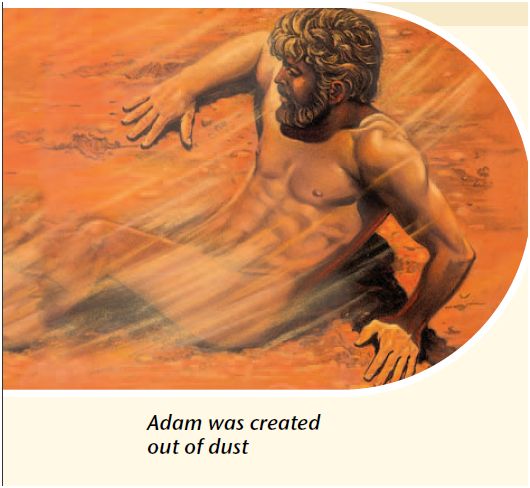
Man has dominion over all the earth Evolution teaches that apes are older than men.(originally anyway) So the Apes have had a longer time to evolve. Man dominates every continent. Mankind is able to live in every environment on earth. Men have learned to live in the sea and even outer space in space stations. mankind has learned to be the dominant species in every environment as well. Monkeys with apes are limited to tropical environments. Apes are not even necessarily the most dominant animals in there own habitats. (verses elephants, lions and hippos).
Intelligence
"In terms of intelligence many have argued that dolphins are superior to chimpanzees in IQ Animal Planet Bottlenose dolphins process information both visually and acoustically. They're able to recognize and respond to pictures they see on underwater television screens, a talent that chimpanzees struggle with unless they've received extensive training. Scientists say that the dolphin's ability to understand hand signals from a trainer on a screen as well as it does from a live trainer demonstrates abstract thinking skills. Where do dolphins get these higher-thinking skills? Part of it may come from brain size -- and dolphins' brains are comparable to those of humans. That is, the brain takes up about 5 percent of the dolphin's body weight and uses about 20 percent of its metabolic energy [source: University of Michigan]. Dolphin brains still don't match their head sizes, however. Most of the dolphin head is made up of fat. Chimpanzees tend to be challenged with understanding the purpose of pointing, but bottlenose dolphins usually understand the gesture when humans use it. This is perhaps all the more impressive because they don't actually have arms, which could suggest advanced body-mapping abilities. What's more, some research has shown that dolphins can plan. In a training study, two dolphins were given a command of "tandem, create." The pair dove under the water, appeared to communicate and then leapt out of the water next to each other simultaneously. The animals previously had been taught the meaning of the create sign when trainers rewarded them for coming up with novel tricks or behaviors when trainers gave the sign. In the pair demonstration, they planned a novel activity together [source: Dingfelder]. The pair activity brings to mind one theory for why both chimps and dolphins are smarter than your average mammal: Both animals -- like humans -- rely heavily on social systems. Male dolphins even hang out in small groups and work together to attract and herd female mates. Not all primates form such complex social systems -- orangutan and gorilla systems are not as complex as those of dolphins, other primates or humans, of course." http://curiosity.discovery.com/question/bottlenose-dolphin-chimpanzee-intelligence So the apes and monkeys, although extraordinary beasts have failed to establish for themselves the nature of Man.

You swine!! (similarities with humans and pigs)
If we are just focused on the ideas of similarity, there are other animals which could have been part of man's ancestry such as pigs. http://www.news-medical.net/news/20121117/Researchers-discover-health-similarities-between-humans-and-pigs.aspx,
http://www.abc.net.au/science/articles/2010/05/03/2887206.htm There actually are scientists out that believes that pigs may be human ancestors! "Georgia geneticist challenges evolution, links humans to pigs Posted in Atlanta, Ben Smith, Michelle Hiskey, Reinvention, Transformation Date: July 29th, 2013, 11:30 am 302 247 10 2110 By Ben Smith Our ancestor may have looked like this. To Athens geneticist Gene McCarthy, pigs used to conjure filth and greed. But after years of research into this species, McCarthy sees a kindred spirit. Pigs, according to his Hybrid Hypothesis published last month on his website, Macroevolution.net, helped create humans by mating with chimpanzees. As radical as it sounds—not to mention a coupling that many of us would rather not visualize—McCarthy is also following the steps of scientists like Galileo who risked derision to revolutionize how we understand our world and how we got here. McCarthy has offended evolutionists and creationists alike and even had a ribald comedy sketch aired on late night TV." "This is no joke, however. Phys.org, a respectable science research news website, published its first article by reporter John Hewitt on McCarthy’s theory July 3. The reaction was so strong that Phys.org followed up with a second article July 25." “Extraordinary theories require extraordinary evidence and McCarthy does not disappoint,” wrote Hewitt. “Rather than relying on genetic sequence comparisons, he instead offers extensive anatomical comparisons, each of which may be individually assailable, but startling when taken together.” "Science currently supposes the chimpanzee to be our closest living relative. McCarthy believes humans evolved from an original pig-chimp mating, likely a female chimpanzee and a male pig, followed by several generations of “backcrossing.” In other words, the offspring and descendants of that pairing, like Tarzan, lived among chimpanzees, but unlike Tarzan, McCarthy says, they mated repeatedly generation after generation with chimps, becoming more and more like chimps and less and less like pigs." http://saportareport.com/blog/2013/07/mccarthy_human_pig_chimp_evolution/ - See more at: http://saportareport.com/blog/2013/07/mccarthy_human_pig_chimp_evolution/#sthash.bqIavrV5.dpuf"
D. Man has a more spiritual dimension than apes. A biblical worldview hints that animals have a spiritual dimension, yet man does seem to have a more spiritual quality. Ecclesiastes 3:21 Who knoweth the spirit of man that goeth upward, and the spirit of the beast that goeth downward to the earth? James 3:9 Therewith bless we God, even the Father; and therewith curse we men, which are made after the similitude of God. a. man's mind Typically atheism has been based on the assumption of materialism. That everything in the universe is material, not spiritual. As a result the mind of man must therefore be a immaterial aspect of the brain. For quite a while this was simply a philosophical argument. But very recently in the field of neuro-science it has been shown that the brain fully mapped out still does not have any physical wiring to bind all of our perceptions together. http://youtu.be/QXRYruKqmlw https://archive.org/details/Redwood_Center_2012_06_27_Jerome_Feldman
sadly this video was taken down .
here is another video which explains what is called the visual binding problem
https://youtu.be/QXRYruKqmlw
The brain has been completely mapped out. Yet the nerve chords do not connect things in our sight such as color and movement. The mind which performs these connections has not been detected and therefore is immaterial.

So if the brain can not physically account for all aspects of the mind, and yet the mind functions, it is apparent that the mind has immaterial components in order to function.
B. man's religiosity)

The immaterial-ism of the mind if just the tip of the iceberg. Once we have come to realize that there is an immaterial world we can now look at the history of mankind and realize a universal religious need. Man's mental world open's up the gateway to man's spiritual needs. We see this manifest itself in several ways. Many have dismissed the universal religious nature of Man as an argument for the existence of God. But the religious nature of man is still a fact. even people who do not believe in God are in a search to transcend themselves. We can see this among atheist groups in various sects such as: Evolution, materialism, psychology, communism, environmentalism, existentialism, humanism etc. There is a need to exalt these ideas in a exaggerated urge to find transcendent meaning. If the mind is immaterial and there is the urge to find the immaterial spiritual realm why wouldn't it stand to reason that there is an immaterial/spiritual reality?

E. The God whom we image A. the anthropic principle) All of reality plays a role in preserving and sustaining mankind as the dominant species. Was the Universe made for us? anthropic principle noun Definition of ANTHROPIC PRINCIPLE : either of two principles in cosmology: a : conditions that are observed in the universe must allow the observer to exist —called also weak anthropic principle b : the universe must have properties that make inevitable the existence of intelligent life —called also strong anthropic principle http://www.merriam-webster.com/dictionary/anthropic%20principle "You've just checked into your hotel room for a weekend's getaway. Thrilled by the accoutrements, you immediately walk onto the room's balcony to take in the eighth floor view. Unfortunately, the guardrail gives way the instant you lean on it. You plummet, falling head over heels toward the pavement of the street below. You scream, but for some reason you don't feel the splat and splintering of every bone in your body. No, instead you find yourself immersed in an immense, soft bed. Of all the vehicles to fall into, you managed to hit an open trailer full of defective pillows from the local bedding factory. Why is it that conditions were just right for your survival? Cosmologists often apply this question to life on Earth with the Goldilocks principle, which ponders why Earth is "just right" for life. The anthropic principle tackles an even greater question: Why is the universe itself just right for life? For instance, when you compare the electromagnetic force to gravity, we find that electromagnetism is 39 times stronger, according to physicist and author Victor J. Stenger. And that's handy because if the two powers were more evenly matched, stars wouldn't burn long enough for life to develop on an orbiting planet. Scientists refer to this as an anthropic coincidence, or a coincidence related to mankind's very existence. Here's another example that Stenger reminds us of: A vacuum in the universe is a lot less dense than we previously thought (139 times less dense, in fact). That's significant because if the original higher estimates had been correct, the universe would have blown apart eons ago. So if certain conditions in our universe were just a little off, life would have never evolved. Just how is it that we're so fortunate? Of all possible universes, why did ours turn out like it did? In 1974, astronomer Brandon Carter tackled this quandary by introducing the anthropic principle. Carter hypothesized that anthropic coincidences are part of the universe's very structure and that chance has nothing to do with it. He proposed two variants: Weak anthropic principle: This response to anthropic coincidence may sound like a slice of common sense. Simply put, Carter pointed out that if our universe weren't hospitable to life, then we wouldn't be here to wonder about it. As such, there's no sense in asking why. Strong anthropic principle: In this version, Carter draws on the notion of the Copernican Principle, which states that there's nothing special or privileged about Earth or humanity. He states that since we live in a universe capable of supporting life, then only life-supporting universes are possible. Cosmologists have devised more than 30 additional takes on the anthropic principle [source: Stenger]. They include the quantum physics-flavored participatory anthropic principle, which states that no universe can be real until it is observed, and the final anthropic principle, which holds that intelligence is a necessary property of the universe; once created it can never be destroyed. There but for fortune, this universe might not have permitted the evolution of intelligent life, so the anthropic principle is a scientific attempt to address the question "Why?" http://science.howstuffworks.com/science-vs-myth/everyday-myths/anthropic-principle.htm

We live in a universe that has sustained human life as the dominant species(as opposed to monkeys or dolphins) for thousands of years. If the Human mind is a gateway to a spiritual realm and mankind has been sustained by the universe in order to accomplish this, then humanity is connected to the God of the universe. Acts 17:22 Then Paul stood in the midst of Mars’ hill, and said, Ye men of Athens, I perceive that in all things ye are too superstitious. 23 For as I passed by, and beheld your devotions, I found an altar with this inscription, TO THE UNKNOWN GOD. Whom therefore ye ignorantly worship, him declare I unto you. 24 God that made the world and all things therein, seeing that he is Lord of heaven and earth, dwelleth not in temples made with hands; 25 neither is worshipped with men’s hands, as though he needed any thing, seeing he giveth to all life, and breath, and all things; 26 and hath made of one blood all nations of men for to dwell on all the face of the earth, and hath determined the times before appointed, and the bounds of their habitation; 27 that they should seek the Lord, if haply they might feel after him, and find him, though he be not far from every one of us: 28 for in him we live, and move, and have our being; as certain also of your own poets have said, For we are also his offspring. 29 Forasmuch then as we are the offspring of God, we ought not to think that the Godhead is like unto gold, or silver, or stone, graven by art and man’s device. 30 And the times of this ignorance God winked at; but now commandeth all men every where to repent: 31 because he hath appointed a day, in the which he will judge the world in righteousness by that man whom he hath ordained; whereof he hath given assurance unto all men, in that he hath raised him from the dead."
Subscribe to:
Posts (Atom)